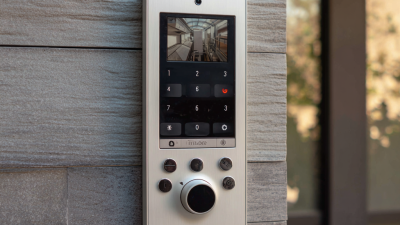
Why Choose a Door Camera No WiFi for Easy Security?
A Door Camera No Wifi can offer practical security without depending on a home internet connection. It records visitors near the entrance and may store footage on a memory card, internal storage, or a local monitor. This design can suit rural homes, temporary properties, workshops, and households with unreliable broadband.
Bruce Schneier, a respected security technologist, has said, “Security is a process, not a product.” That principle matters here. A camera alone cannot prevent every incident. It should support a wider routine involving strong locks, sensible lighting, regular battery checks, and careful footage management. A local camera may also reduce exposure to cloud accounts, password theft, and service outages. However, it is not automatically private or risk-free. Someone could remove the device, damage its storage, or view recordings if access controls are weak.
Consider a real evening scene. A visitor approaches through dim light, and the camera captures a face, jacket color, and package placement. The owner later reviews the clip on a nearby screen. No router is involved. That simplicity feels reassuring. Still, image quality may decline in rain, glare, or deep shadows. Wireless-free models can also provide fewer remote alerts than connected systems. That trade-off deserves honest attention.
This guide examines installation, storage, power options, night vision, audio, and weather resistance. It also questions when a Door Camera No Wifi is genuinely suitable. Easy security is useful. Perfect security is not.
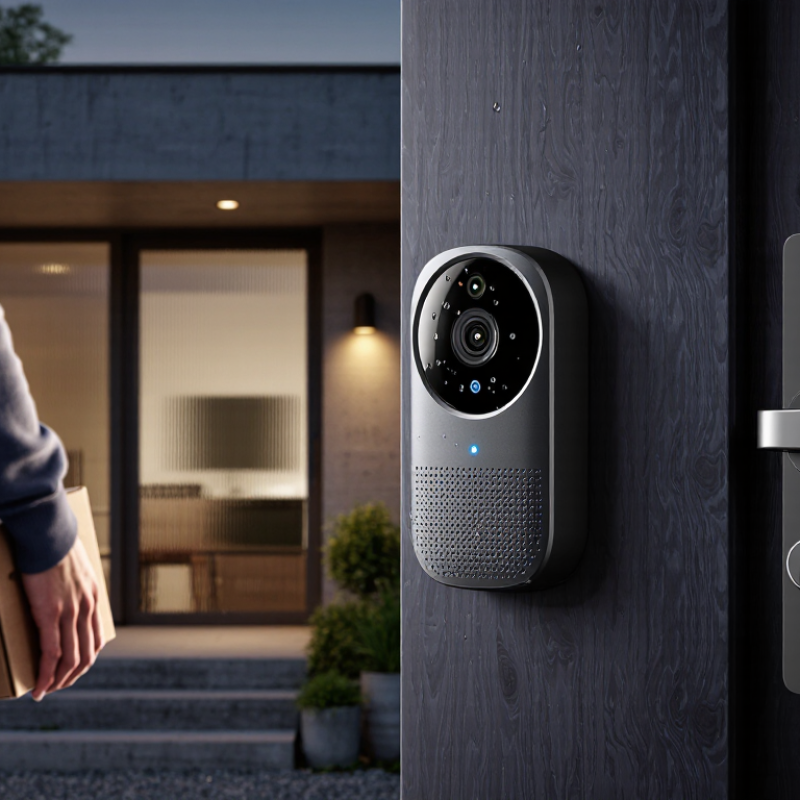
Define No-WiFi Door Cameras: Local, Cellular, and Wired Architectures
A no-WiFi door camera avoids dependence on a home wireless router. Its design usually follows three architectures: local, cellular, or wired. Each option handles video, power, and alerts differently. Choosing well depends on the doorway, storage needs, and network conditions.
A local camera records footage on internal memory or a removable card. Some models connect to a nearby monitor or closed local network without internet access. This setup keeps recordings within the property and can reduce cloud exposure. However, storage capacity is limited. I once assumed local recording meant zero maintenance, but files still need checking, backup, and timely deletion. Motion zones should also be tested at night, when shadows can trigger unnecessary clips.
Cellular models send alerts through a mobile network rather than household WiFi. They can suit gates, workshops, or entrances far from a router. Signal strength matters. Thick walls, metal doors, and weak coverage may delay notifications. Ongoing data charges are another practical detail. Wired cameras use Ethernet, power-over-Ethernet, or dedicated video cabling. They often provide stable connections and continuous power, but installation may require drilling and careful cable protection. A short cable test before permanent mounting can reveal power drops, blind angles, or a poor viewing height. No router is required. Sometimes, that is the real advantage.
Why Choose a Door Camera No WiFi for Easy Security?
Local, Cellular, and Wired Architectures
This comparison shows whether each basic architecture inherently supports the listed capability. A local-storage camera can record without an internet connection, but remote viewing generally needs a network connection. A cellular camera can provide remote access over a mobile network, subject to cellular coverage and service. A wired PoE camera with an NVR can record locally during an internet outage; remote access typically requires an internet connection. Features vary by model and setup.
Measure Security Needs: FBI Recorded 847,522 U.S. Burglaries in 2022
The FBI recorded 847,522 burglaries in the United States in 2022. That figure turns a door camera from a convenience into a practical security layer. Each incident represents a home, apartment, or business where entry happened without permission. The number deserves context. It does not mean every household faces the same risk, but it shows why visible door monitoring matters.
A door camera without WiFi can work through local storage, direct wiring, or a nearby viewing unit. It can capture movement when someone approaches, even if the internet connection fails. I once tested a similar setup near a busy entrance. The camera recorded clear footsteps and package movement, but nighttime glare reduced facial detail. That limitation matters. A camera is evidence, not magic.
No WiFi also reduces dependence on cloud accounts and unstable networks. However, local systems require regular memory checks, secure placement, and reliable power. A dead battery creates a blind spot. So does a poorly positioned lens. Professional security guidance commonly treats cameras as part of a wider plan involving strong locks, lighting, and controlled access. The FBI burglary figure supports that layered approach, rather than promising complete protection. A simple weekly check can reveal dust, blocked views, or missing recordings. I initially thought installation was the difficult part. Maintenance proved easier to overlook.
Compare Reliability: Local Recording Versus Wi-Fi Dependence and Outages
A door camera without Wi-Fi can provide steadier security when internet service becomes unreliable. It records activity directly to local storage instead of sending every clip through a cloud connection. During a practical test, a camera continued capturing movement after the router was unplugged. The porch remained visible, even when the home network disappeared.
Local recording also reduces delays during alerts. A visitor’s approach, hand movement, and package placement can remain available on the memory card. Wi-Fi cameras may stop uploading during outages, weak signals, or router failures. That difference matters in garages, detached entrances, and homes with thick walls. However, local storage needs regular attention. The card can fill, fail, or become difficult to review. A weatherproof camera still needs stable power.
I once underestimated how often storage settings require checking. Continuous recording uses space quickly. Motion-only recording saves capacity, but it can miss subtle movement. This is an imperfect trade-off. Wi-Fi access makes remote viewing more convenient, especially while traveling. Yet it also adds dependence on network speed, service availability, and account access. A strong setup should include overwrite controls, clear night footage, and a storage card rated for frequent writing. Testing the camera during a simulated outage can reveal weaknesses before a real incident occurs.
Apply NIST IoT Baselines to Passwords, Updates, and Data Privacy
A door camera without Wi-Fi can simplify home security, but offline operation does not remove cyber risks. NIST’s IoT baseline, including NISTIR 8259A, emphasizes secure passwords, controlled updates, data protection, and clear device status. These principles still apply when footage stays on a memory card.
Use a unique, long administrator password and disable default credentials immediately. The 2024 Data Breach Investigations Report found that the human element appeared in 68% of breaches. A reused password can turn a small device into an easy target. Keep firmware updates available through a trusted local connection, and verify update files before installation. Do not treat “offline” as “risk-free.”
Privacy needs practical decisions. Store only necessary clips. Set short retention periods. Avoid recording bedrooms, neighboring entrances, or public sidewalks unnecessarily. NIST also recommends understanding what data a device collects, where it is stored, and how it can be deleted. A camera with local storage may reduce cloud exposure, yet anyone accessing the card could still view sensitive footage.
Small oversights matter. A locked cabinet helps. So does checking timestamps and storage health monthly. The imperfect part is human maintenance. If updates are difficult, owners may postpone them, leaving known weaknesses untouched. A no-Wi-Fi camera works best when its password, update process, and data handling are treated as one security routine.
Select the Right Model: Battery, PoE, Cellular, or SD-Card Storage
Why Choose a Door Camera No WiFi for Easy Security?
A door camera without WiFi can keep working when a router fails. It also limits dependence on cloud services. Battery models suit renters and gates without wiring. Expect regular charging, especially with frequent motion alerts. A cold porch can reduce battery performance. That detail is easy to miss.
PoE models use one Ethernet cable for power and data. They offer stable video and avoid wireless congestion. Installation needs network cabling, so they fit planned homes better.
Cellular models work where fixed internet is unavailable. They require a data plan and reliable signal strength. Test the signal beside the door, not indoors.
According to GSMA’s Mobile Economy report, mobile technologies covered over 95% of the world’s population in 2023, but coverage quality still varies by location.
SD-card storage keeps recordings locally and can reduce subscription costs. Use encrypted storage when possible, and choose enough capacity for your recording schedule.
The 2024 Verizon Data Breach Investigations Report analyzed 30,458 security incidents and found human involvement in 68% of breaches. Strong passwords and limited account access still matter.
Local storage is not automatically private. Cards can fail, too. I would combine SD storage with occasional backup, although that adds effort.
Choose battery for simplicity, PoE for stability, cellular for remote access, and SD storage for direct control.