Leave Your Message

2026 Top Door Camera No WiFi Which Type Is Best?

Choosing the 2026 Top Door Camera No WiFi requires more than comparing resolution, storage, and price. A camera without wireless internet may use local microSD storage, a wired NVR, Ethernet, cellular data, or a simple monitor. Each design changes installation effort, privacy, reliability, and daily convenience.

Bruce Schneier, a respected security technologist, offers a useful reminder: “Security is a process, not a product.” That principle matters at the front door. A local-storage camera can keep footage inside the property, while a cellular model may send alerts during a Wi-Fi outage. A wired PoE camera can provide steady power, but drilling through brick may be difficult. Battery models install faster, yet cold weather and frequent motion can shorten runtime.

There is no universal winner.

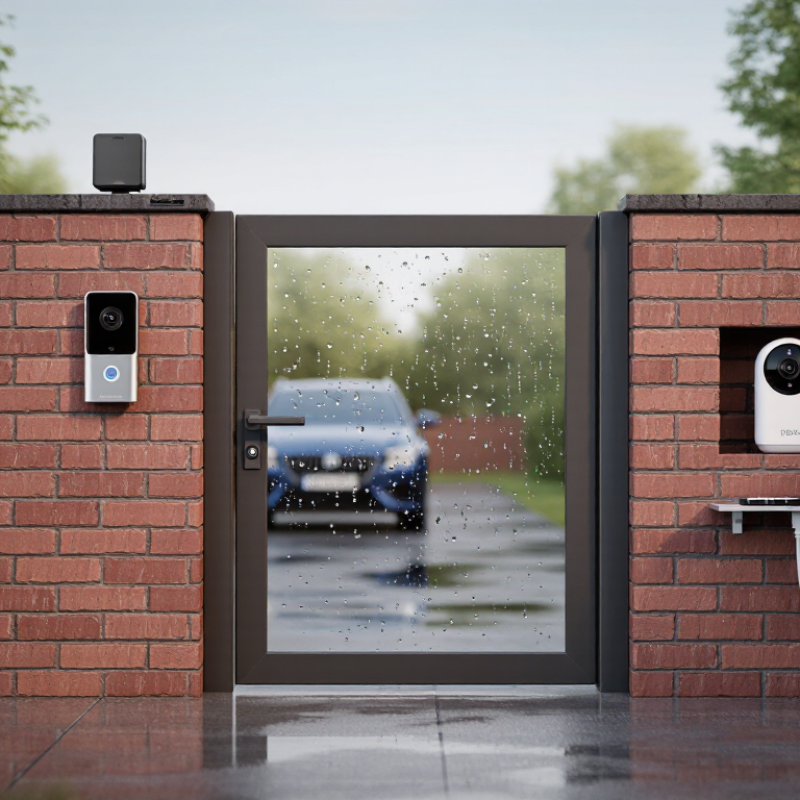
The best type depends on the doorway, power access, recording needs, and your tolerance for maintenance. A farm gate may favor cellular service. An apartment entrance may suit a compact local recorder. A busy family home might need continuous wired recording, not motion clips alone. These choices can feel obvious until real conditions appear. Glare, rain, weak cellular coverage, and full storage cards can expose weaknesses quickly.

This guide compares the main Door Camera No Wifi types for 2026. It focuses on practical performance, installation reality, data control, and long-term dependability. Some recommendations may seem less convenient. That is intentional. Convenience is valuable, but a camera that misses an important event is not truly convenient.
2026 Top Door Camera No WiFi Which Type Is Best?

What Is a Door Camera Without WiFi and How Does It Work?

A door camera without WiFi does not depend on a home router or cloud connection. It usually records to internal memory, a removable storage card, or a separate indoor monitor. Some models use a wired connection for power and video. Others use cellular service, which adds coverage and subscription concerns. The camera detects movement with a PIR sensor or image analysis. It then saves short clips, records the time, and may trigger a chime. No internet is required.

In a typical setup, the lens sits beside the door or inside a peephole. A battery model wakes when someone approaches, while a wired model can monitor continuously. Local storage improves privacy and avoids remote-server delays. However, storage can fill quickly. A reliable installer should check overwrite settings, night vision, viewing angle, and weather protection. A narrow angle may miss a package near the floor. Glare can also hide a visitor’s face.

The best type depends on the property, not only the camera specifications. Choose a wired local recorder for stable, continuous coverage. Choose a battery peephole camera where drilling is difficult. A cellular model suits locations without broadband, but signal strength must be tested at the door. It is not perfect. Batteries weaken in cold weather, and local footage disappears if the device is stolen.

Test it after sunset, during rain, and from the actual approach path. That small check may reveal more than a product chart.
Which Types of No-WiFi Door Cameras Are Available in 2026?

In 2026, no-WiFi door cameras come in several practical forms. Wired analog cameras send video through coaxial cable to a local recorder. They suit older homes with existing security wiring. PoE cameras use one Ethernet cable for power and data, but they still need a local network. They do not require WiFi. Cellular models use a 4G or 5G SIM card, making them useful for gates, workshops, and houses without broadband. Data fees remain a real drawback.

Some models store footage on a microSD card or a private recorder. Others connect to a dedicated indoor monitor through a closed wireless signal. These systems can show a visitor even when the internet fails. Battery-powered units are easy to install, but cold weather and frequent motion can shorten runtime. A 2024 Fortune Business Insights report valued the global video doorbell market at about 2.1 billion dollars in 2023, showing strong demand for entry monitoring. However, market growth does not guarantee dependable local recording.

For most homes, PoE is the strongest long-term choice when Ethernet can be installed. Choose cellular for remote properties. Choose local-storage wireless systems for apartments or renters. Check night vision, backup power, storage encryption, and monthly costs. Test the camera behind your actual door. Walls, metal frames, and rain can reduce performance. My own concern is simple: “No WiFi” may still mean internet dependence. A SIM card is not independence.

2026 Top Door Camera No WiFi: Which Type Is Best?

Typical Local-Recording Performance by No-WiFi Door Camera Type

Wired coaxial and PoE Ethernet cameras are generally the best choices for continuous recording because they can operate with a local DVR or NVR without WiFi. Battery-powered cameras are easier to install and usually record motion events to a memory card, while wired video intercoms prioritize visitor communication over long-term video storage. The storage-retention figures are representative category benchmarks for one camera and can vary with resolution, bitrate, motion activity, and storage capacity.

Rating scale: 1 = limited suitability, 5 = excellent suitability for continuous local recording.

How Do Wired, Cellular, and Local-Storage Models Compare?

For a 2026 door camera without WiFi, the wiring choice matters more than image resolution. Wired models use existing doorbell power or low-voltage wiring. They usually provide steady video and avoid battery charging. A qualified installer should check voltage, transformer capacity, and cable condition. Poor wiring can create missed recordings. That detail is easy to overlook.

Cellular models send alerts through a mobile network instead of home internet. Ericsson’s November 2024 Mobility Report forecast 4.6 billion 5G subscriptions worldwide by the end of 2025. Coverage still varies sharply between streets and buildings. A camera near a metal door may perform worse than expected. Cellular is practical for renters, gates, detached garages, and properties without broadband. However, monthly data fees add a long-term cost. I would test signal strength at the mounting point before buying.

Local-storage models record to a memory card or onboard storage, keeping footage inside the camera. This reduces cloud dependence and can improve privacy. The 2024 Verizon Data Breach Investigations Report found that the human element appeared in 68% of breaches, so strong passwords and firmware updates remain essential. Local storage is not automatically secure. Someone could remove the card, and damaged storage may erase important clips. Use encrypted storage when available, set automatic overwriting carefully, and review a sample recording at night. For most fixed homes, wired plus local storage offers dependable operation. Cellular becomes the better compromise when installation or broadband is uncertain.

What Features Matter Most When Choosing a No-WiFi Door Camera?

What Features Matter Most When Choosing a No-WiFi Door Camera?

A no-WiFi door camera should record locally, using internal storage or a removable memory card. This avoids cloud dependence and keeps footage available during internet outages. Check recording clarity before buying. A wide view should show faces, packages, and the walkway without excessive distortion. Night vision also matters, especially near an unlit porch. Infrared images should reveal clothing details without turning faces into pale shapes.

Motion detection needs careful adjustment. Basic sensors may trigger repeatedly when trees move or headlights pass. Adjustable sensitivity and activity zones can reduce useless recordings. Two-way audio is helpful for delivery conversations, but a clear microphone matters more than loud volume. Test the speaker from several steps away. Small delays can make conversations awkward.

Power deserves serious attention. Battery models are convenient, yet cold weather and frequent motion can shorten runtime. Wired options offer steadier operation but require suitable installation. Weather resistance should handle rain, dust, and temperature changes around the entrance. I once focused too much on resolution and overlooked storage limits. That was a mistake. A camera with sharp video is less useful when it overwrites important clips quickly. Check file access, battery alerts, physical controls, and privacy settings before installation. Keep it simple. Reliability beats impressive specifications.

Which No-WiFi Door Camera Type Is Best for Different Homes?

A no-WiFi door camera is not one universal solution. The best type depends on power, storage, signal, and household routine. For apartments with nearby outlets, a wired camera connected to a local recorder offers steady viewing and continuous recording. It suits residents who want fewer battery checks. Installation may require drilling or landlord approval, though. That detail is often ignored.

A battery model with an SD card fits rented homes and front doors without wiring. It is simple to move, but motion recording can miss the first seconds. Cold weather may also reduce runtime. Rural houses or properties with unreliable broadband may benefit from a 4G cellular camera. It uses mobile data, so monthly costs and signal strength matter. For homes with a distant gate, this option can outperform a short-range local system. Check weather sealing, night vision, and storage encryption before buying. Claims about “all-day” battery life deserve skepticism.

Tips: Test the camera at night before final mounting. Stand outside with a parcel. Check faces, the path, and the street edge. Keep the lens under shelter when possible. Use a strong device password and enable automatic updates. Store recordings only as long as needed. If privacy zones are available, mask neighboring doors and windows. I once found a camera aimed too low; the porch was clear, but faces were missing. Placement matters more than extra features.

2026 Top Door Camera No WiFi: Which Type Is Best for Different Homes?

Camera type How it connects without WiFi Typical power method Recording and storage Internet requirement Best suited homes Main advantages Main limitations
Wired analog video doorbell Coaxial or twisted-pair cable to a local digital video recorder or monitor Low-voltage wired supply, commonly 12 V DC or 24 V AC depending on the system Local recorder or indoor monitor; recording capacity depends on hard-drive size and video settings Not required for live viewing and local recording; remote viewing needs a separately connected network recorder Existing houses with doorbell wiring and owners who want simple local monitoring Stable video connection, predictable power, no radio interference, and no recurring cellular data cost Requires cable installation; image quality and features are generally lower than modern network cameras
PoE IP door camera One Ethernet cable carries data and power to a PoE network video recorder or local network switch Power over Ethernet; the cable run is commonly limited to about 100 m per segment without additional equipment Local network video recorder, server, or compatible memory storage; supports higher-resolution recording than most analog systems No internet needed for local operation; internet is needed for off-site alerts or remote access New construction, larger homes, and properties with Ethernet cabling or structured wiring Reliable wired connection, centralized recording, strong video quality, and easier multi-camera expansion More difficult to retrofit; requires compatible networking equipment and basic cable installation
4G or 5G cellular door camera Mobile network through a SIM or eSIM; does not use the home WiFi network Rechargeable battery, wired low-voltage supply, or mains adapter depending on the installation Cloud storage, local memory card, or both; cellular video uploads consume mobile data Requires cellular coverage and an active data plan; remote viewing can work without home broadband Rural houses, detached gates, workshops, rental properties, and homes with unreliable broadband Works independently of household WiFi and can provide remote alerts over the mobile network Recurring data cost, variable signal strength, higher power consumption during live view, and possible carrier restrictions
Local-storage battery door camera Direct local connection to an indoor receiver, dedicated monitor, or built-in memory storage Rechargeable battery; runtime varies with temperature, motion frequency, night vision, and live-view use Internal memory, removable memory card, or a paired indoor receiver; capacity depends on storage size and recording mode Not required when recording and viewing locally; remote access is generally unavailable without another network connection Apartments, rentals, temporary installations, and homes where drilling or cabling is restricted Quick installation, no WiFi credentials, low infrastructure cost, and better privacy when footage remains local Battery charging is required; local storage may be lost if the camera is removed or damaged
Video peephole camera Camera and indoor display communicate through a proprietary short-range wireless link or direct local system Battery-powered camera, often with a rechargeable indoor display or separate power supply Local display recording, internal memory, or removable memory card depending on the design Usually unnecessary for live viewing and local recording; remote notifications normally require internet access Apartment doors and rental homes with a compatible standard peephole Minimal exterior modification, discreet installation, and convenient indoor visitor viewing Limited viewing angle or night performance on some models; compatibility depends on door thickness and peephole size
Standalone wired monitor door camera Direct cable from the exterior camera to an indoor screen or intercom monitor Mains-powered indoor monitor with low-voltage power delivered to the camera Live viewing is standard; recording may be available through internal memory or a removable memory card No internet required for basic operation, two-way audio, or door-release control when supported Family homes, assisted-living settings, and users who prefer a physical indoor screen Very simple operation, consistent indoor display, and dependable performance during internet outages Limited off-site access and more visible cabling compared with wireless installations
Key buying point: “No WiFi” can mean two different things. A local-storage or wired monitor system can operate without both WiFi and internet, while a cellular camera avoids WiFi but still requires mobile coverage and a data plan. For the most dependable local operation, choose a wired analog, PoE, or standalone wired monitor system. For remote viewing in an area without home broadband, choose a cellular model.
Selection checklist: Confirm the available power source, door and wall construction, night-light conditions, required viewing angle, local storage capacity, cellular coverage, weather protection, privacy rules, and whether remote alerts are necessary.